原标题:韩国男子长期家暴中国妻子,还持刀威胁,被判坐牢3年半韩媒报道截图(韩国TJB电视台)
海外网9月13日电 据韩国纽西斯通讯社报道,韩国大田地方法院9月11日对一起涉嫌杀人未遂案进行宣判,判处被告人3年零6个月有期徒刑。被告人46岁,受害人是他的中国籍妻子,现年33岁。
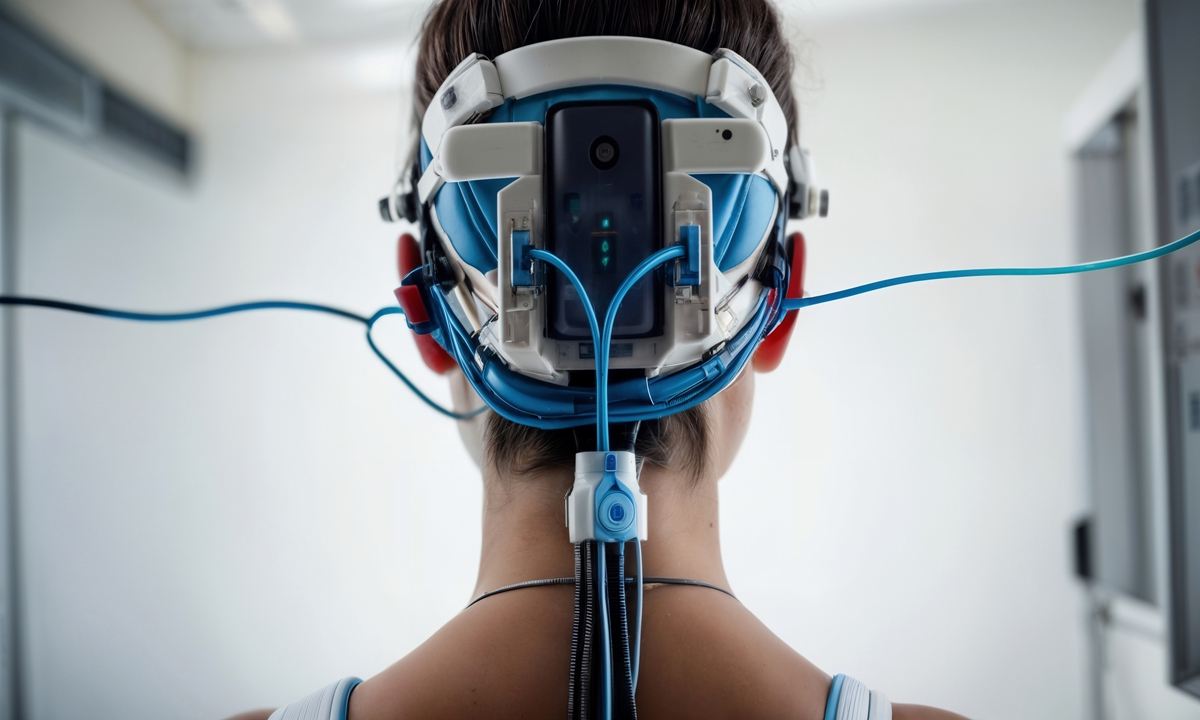
Photo: VCG
Chinese researchers have developed a multifunctional electrode coating that addresses key challenges in long-term brain-computer interface (BCI) implantation, including signal loss and tissue adhesion, bringing BCI one step closer to clinical application, the Global Times learned from the research team behind the findings on Sunday.
As an emerging field combining neuroscience and artificial intelligence (AI), BCI faces a major challenge of ensuring long-term compatibility between electrodes and brain tissue. Previous clinical trials showed that immune responses could cause implanted electrodes to retract after just three months, severely reducing signal quality and the number of available channels.
This problem stems from chronic inflammation triggered by implants, which creates insulating scar tissue around electrodes and separates them from neurons. Irreversible adhesion between electrodes and brain tissue after long-term implantation also makes device removal risky, potentially causing brain injury during follow-up surgeries.
Experiments showed that flexible neural electrodes coated with this material could operate stably in the brain for more than 300 days and could be safely removed without causing damage. This means the universal coating technology can make electrodes not only operate stably over the long term but can also be safely removed and replaced after aging, paving the way for long-term BCI applications.
Developed by the research team led by Zhang Wei at the Technical Institute of Physics and Chemistry, Chinese Academy of Sciences, associated with Beijing Tiantan Hospital, Shanghai Institute of Microsystem and Information Technology and NeuroXess, a high-tech life science company specializing in BCI technologies, the cationic alternating peptide electrode coating preserves electrode flexibility and conductivity, while offering antibacterial, anti-protein adsorption and immune-rejection-inhibiting functions.
A 300-day animal study showed the coating's effectiveness. Bare electrodes experienced a sharp loss of recording capability after 90 days of implantation and could barely detect neuronal signals after 300 days. In contrast, coated electrodes maintained stable recording channels and consistently captured neural signals above 155 microvolts.
In terms of neural modulation, after 300 days of implantation, conventional electrodes required a current of 100 microamps to induce weak limb responses, while coated electrodes triggered clear movements with only 2 microamps, improving modulation efficiency by 50 times.
Notably, the removal tests highlighted a key advantage of the coating that electrodes no longer form irreversible bonds with brain tissue. In the experiments, the coated electrodes were removed intact, with minimal damage to the surrounding brain tissue, Zhang told the Global Times on Sunday.
。2010年两人结婚后,被告人经常家暴妻子,曾导致妻子长时间离家出走,并多次提出离婚。韩媒报道截图(韩国TJB电视台)今年6月3日,妻子再次提出离婚,并称“若不同意就报警,举报自己遭到家暴”,被告人当时正在喝酒,听到消息后被激怒,并挥舞刀具威胁妻子。韩媒报道截图(韩国TJB电视台)韩国法官在阐述量刑标准时表示,被告人在吵架时使用凶器,罪行性质恶劣,而且此前也多次实施家暴。受害人即使没有什么经济和社会基础,也一直要求离婚,由此可见她遭受的恐惧和痛苦有多大。

B | (海外网 刘强)责编:刘强、李萌返回搜狐,查看更多责任编辑:
Current article:http://my16zr.chuanshaonianmokuanchouzhei.sbs/list_mscaam/0zps.html